Keynote Speakers
RIVF 2025 is proud to feature distinguished keynote speakers who are internationally recognized for their contributions to computing, communication technologies, and interdisciplinary innovation. These thought leaders will share cutting-edge research, emerging trends, and insights into future challenges.
Prof. Biplab Sikdar (IEEE Fellow), Provost’s Chair Professor, National University of Singapore
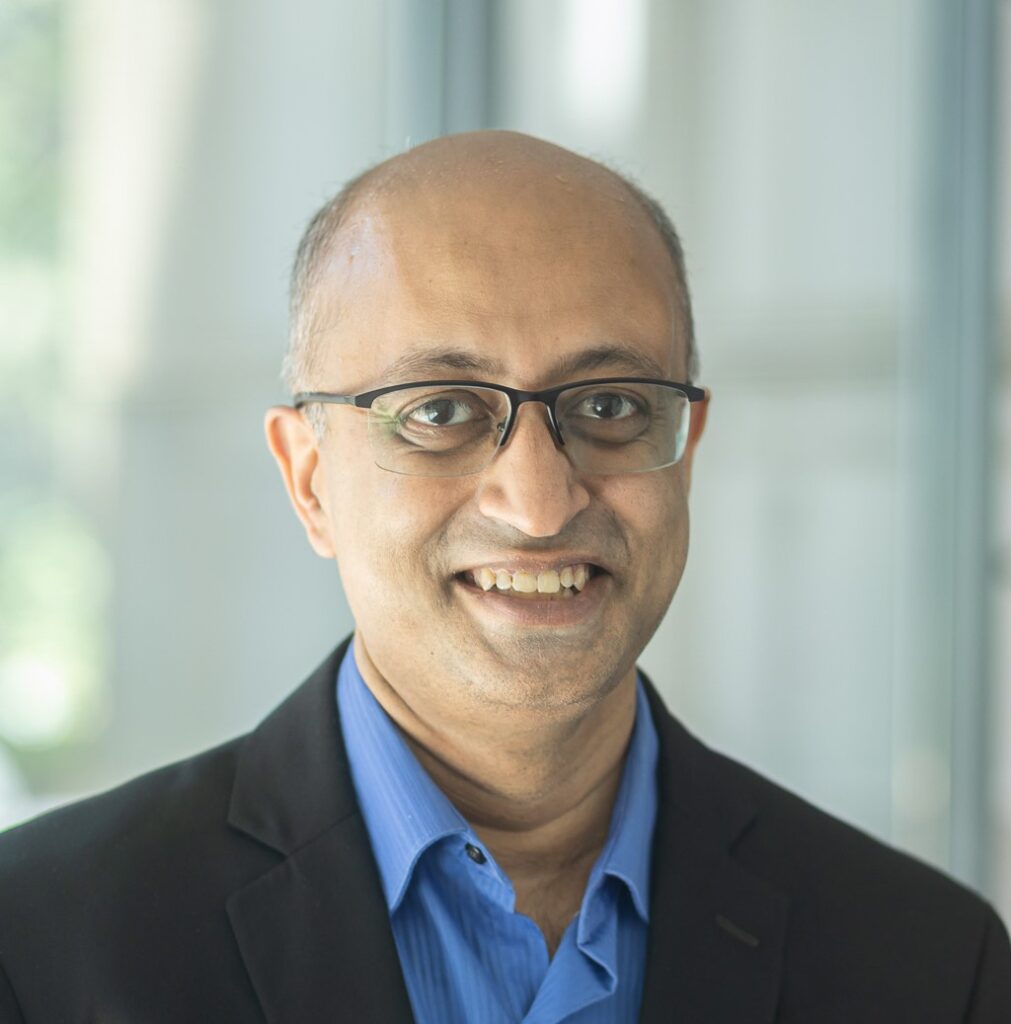
Security Challenges in AI-Driven 6G Networks
Abstract:
The advent of 6G networks promises unprecedented advancements in connectivity, low latency, and massive machine-type communication, setting the stage for a future where artificial intelligence (AI) will play a pivotal role in network management, automation, and optimization. However, the integration of AI into 6G networks also introduces a wide range of security challenges that need to be addressed to ensure the safe and reliable operation of these next-generation networks. This talk will explore the evolving security landscape of AI-driven 6G networks, focusing on potential threats, vulnerabilities, and mitigation strategies. Key topics include the risks of AI-powered attacks, such as adversarial machine learning, data poisoning, and model inference attacks, as well as vulnerabilities in network slicing, edge computing, and Internet of Things (IoT) devices that are expected to proliferate in 6G environments. The seminar will also discuss the importance of trust, privacy, and security in AI-based decision-making processes.
Biography:
Biplab Sikdar is the Provost’s Chair Professor and Head of Department in the Department of Electrical and Computer Engineering at the National University of Singapore, where he also serves as the director of the Cisco-NUS Corporate Research Laboratory. He received the B. Tech. degree in electronics and communication engineering from North Eastern Regional Institute of Science and Technology, Nirjuli, India, in 1996, the M.Tech. degree in electrical engineering from the Indian Institute of Technology, Kanpur, India, in 1998, and the Ph.D. degree in electrical engineering from the Rensselaer Polytechnic Institute, Troy, NY, USA, in 2001. His research interests include IoT and cyber-physical system security, network security, and network performance evaluation. He is a recipient of the NSF CAREER award, the Tan Chin Tuan fellowship from NTU Singapore, the Japan Society for Promotion of Science fellowship, and the Leiv Eiriksson fellowship from the Research Council of Norway. He has served as an Associate Editor for the IEEE Transactions on Communications, IEEE Transactions on Mobile Computing, IEEE Internet of Things Journal, IEEE Open Journal of Vehicular Technology, and IEEE Network. He is an IEEE Fellow, IEEE Distinguished Lecturer, an ACM Distinguished Speaker, and member of Eta Kappa Nu and Tau Beta Pi.
Prof. Truyen Tran, Head of AI, Health and Science, Applied Artificial Intelligence Initiative, Deakin University
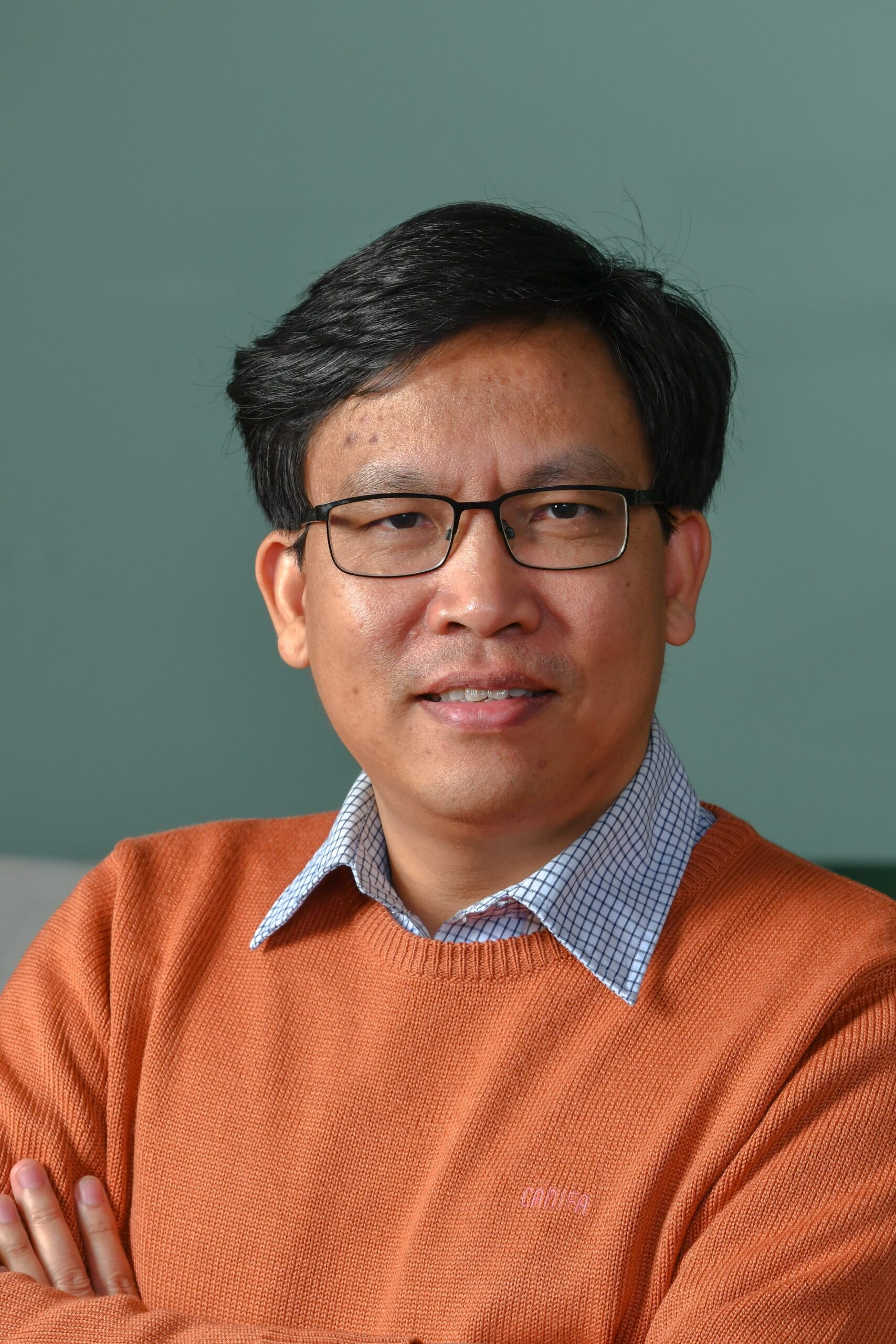
AI for Scientific Discovery: A New Frontier
Abstract:
Sydney Brenner, Nobel Laureate in Physiology, once said, “Progress in science depends on new techniques, new discoveries, and new ideas, probably in that order.” A paradigm-shifting technology of our time is artificial intelligence (AI), which offers new ways to accelerate scientific discovery. This talk will explore how AI is transforming science by automating discovery workflows—representing and leveraging scientific artefacts and knowledge, predicting properties and phenomena, optimising and generating new designs, and reasoning about competing hypotheses. We will also discuss the emerging concept of AI co-scientists: autonomous agents that emulate the scientific discovery process by combining creative exploration with systematic reasoning. These agents collectively propose hypotheses, design experiments, analyse results, and communicate findings while collaborating with human scientists. Specific examples will be drawn from molecular space exploration, drug–protein interactions, chemical synthesis, crystal structure prediction, and property prediction for advanced materials such as superconductors and alloys.
Biography:
Professor Truyen Tran is a leading Australian AI researcher and Head of AI, Health and Science at Deakin University. He pioneers the creation of AI that thinks like scientists and heals like doctors, uniting intelligence, discovery, and healthcare. Professor Tran leads three major programs: AI Future, which explores the foundations of abstraction, reasoning and responsible distributed intelligence; AI4Science, which develops AI Co-scientists that generate hypotheses, design experiments, and accelerate breakthroughs in materials, biology, and energy; and AI4Health, which builds intelligent systems that assist clinicians and personalise healthcare. His work has transformed scientific discovery and medical innovation—from predicting new materials and drugs to enabling early cerebral palsy screening and mental-health support. Recognised internationally for his research excellence and leadership, Professor Tran holds a BSc from the University of Melbourne (2001) and a PhD in Computer Science from Curtin University (2008).